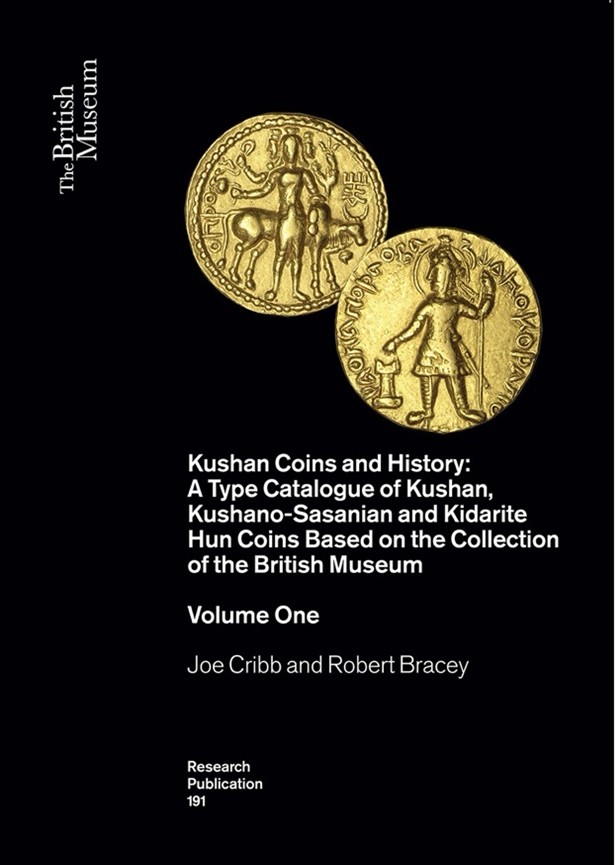
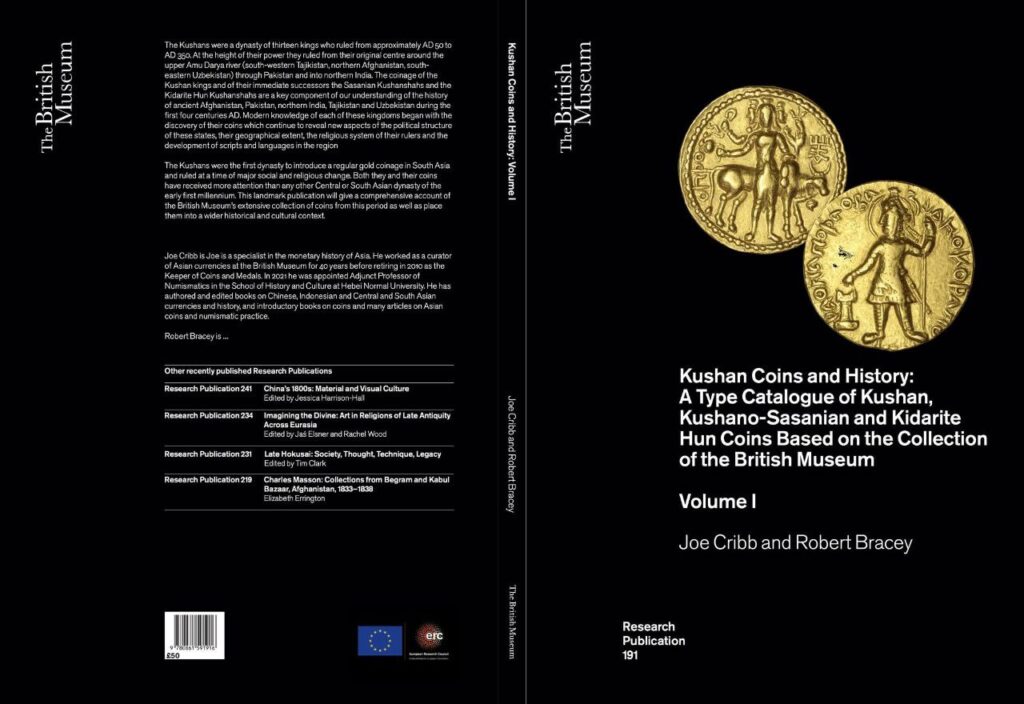
Joe Cribb, Robert Bracey, 2025, Kushan Coins and History: A Type Catalogue of Kushan, Kushano-Sasanian and Kidarite Hun Coins Based on the Collection of the British Museum,The British Museum, London.
A new book, Kushan Coins and History: A Type Catalogue of Kushan, Kushano-Sasanian and Kidarite Hun Coins Based on the Collection of the British Museum, was published by the British Museum in London in 2025. This comprehensive work, which is 870 pages long and split into two volumes, is the result of over twenty years of research by its authors, Professor Joe Cribb of Hebei Normal University and Robert Bracey, Curator of the Asian Coin Collection at the British Museum.
This book is the first comprehensive and modern introduction to the Kushan, Kushano-Sasanian, and Kidarite coin system in English, following the publication of Robert Göbl’s classic work, System und Chronologie der Münzprägung des Kušānreiches (Vienna, 1984).
The Kushans were a dynasty of thirteen kings who ruled from approximately AD 50 to AD 350. At the height of their power, their territory extended from their original center around the upper Amu Darya river (south-western Tajikistan, northern Afghanistan, and south-eastern Uzbekistan) into Pakistan and northern India.
The coins of the Kushan kings and their immediate successors—the Sasanian Kushanshahs and the Kidarite Huns—are a key component in understanding the ancient history of Afghanistan, Pakistan, northern India, Tajikistan, and Uzbekistan during the first four centuries AD. Modern knowledge of these kingdoms began with the discovery of their coins, which continue to reveal new aspects of their political structure, geographical extent, the religious systems of their rulers, and the development of scripts and languages in the region.
The Kushans were the first dynasty to introduce a regular gold coinage in South Asia and ruled during a period of significant social and religious change. For this reason, their coins and history have received more attention than any other Central or South Asian dynasty of the early first millennium.
This book catalogs all the Kushan and related coins held in the British Museum’s collection, while also introducing other types known from public and private collections around the world. The catalog is organized by ruler, mint, and period of issue, and includes an introduction on the history of the Kushan kings, their monetary system, and the history of the British Museum’s collection. The book is not intended to replace Göbl’s work but aims to provide a more accessible and user-friendly reference for archaeologists, historians, and coin collectors.
The table of contents for the two volumes are as follow:
Volume One:
Introduction
History of the Kushans and their Successors
Kushan Coinage
The British Museum Collection of Kushan, Kushano-Sasanian and Kidarite Hun Coins
Appendix 1 Specific Gravity and Gold Purity
Appendix 2 Inscriptions on Kushan, Kushano-Sasanian and Kidarite Hun Coins
Bibliography
Index
Volume Two:
Introduction to the Catalogue and How to Use It
Catalogue
Series A: Kujula Kadphises
Series B: Wima Takto
Series C: Wima Kadphises
Series D: Kanishka I
Series E: Huvishka
Series F: Vasudeva I
Series G: Kanishka II
Series H: Vasishka
Series I: Kanishka III
Series J: Vasudeva II
Series K: Mahi
Series L: Shaka
Series M: Kipunadha
Series N: Meśra
Series O: Kirada and the Early Kidarites
Series P: Peroz
Series Q: Kidara
Series R: Ardashir I
Series S: Ardashir II
Series T: Peroz I
Series U: Hormizd I
Series V: Hormizd II
Series W: Peroz II
Series X: Shapur II
Series Y: Varahran
Series Z: Kidara and Successors
Concordance
The book is available for purchase at the British Museum shop for £60 and can also be downloaded for free at the following link: